Frequently Asked Questions
The most-asked questions about architects.
What exactly does an architect do?
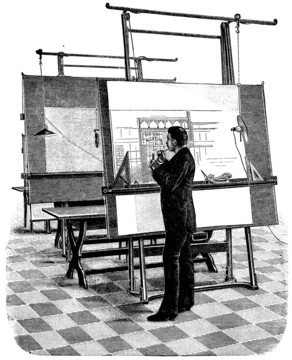
An architect is a licensed professional who designs buildings and structures, balancing aesthetics, functionality, safety, and environmental considerations. They oversee the entire process from initial concept sketches through construction supervision, ensuring the finished work matches their intended vision.
Who are the most frequently cited figures in architectural history?
Names like Le Corbusier, Frank Lloyd Wright, Zaha Hadid, and Louis Kahn dominate most introductory texts and fan discussions. In earlier periods, figures such as Vitruvius, Brunelleschi, and Christopher Wren are equally central to the narrative.
Where should a beginner start exploring architecture?
A solid entry point is a broad survey book covering major movements from antiquity to the present, paired with visits to local landmark buildings. Online podcasts, building-tour video channels, and architecture-adjacent subreddits also make the field approachable without a formal degree.
What are the major architectural movements most fans discuss?
Commonly referenced styles include Gothic, Renaissance, Baroque, Neoclassical, Art Deco, Modernism, Brutalism, and Deconstructivism. Each is typically defined by its historical era, key practitioners, and a distinct set of formal and philosophical principles.
What separates an architect from an architectural engineer?
An architect focuses on spatial design, user experience, and the overall form of a building, while an architectural engineer handles the structural, mechanical, and systems calculations that make the design physically viable. They collaborate closely in practice, but their licensing tracks and training curricula differ.
Which buildings are most often called iconic or landmark structures?
The Sydney Opera House, the Taj Mahal, the Empire State Building, and the Burj Khalifa are among the most universally recognized examples. Regional icons like the Parthenon, the Sagrada Família, and the Guggenheim Bilbao also feature heavily in fan discussions.
How does one typically become a licensed architect?
In most countries the path involves a five-year professional degree, a multi-year internship under a licensed architect, and passing a comprehensive licensing examination. Exact requirements vary by jurisdiction, but the combination of education, supervised practice, and a formal exam is nearly universal.
What are some well-known controversies or turning points in architectural history?
The 1972 demolition of the Pruitt-Igoe housing complex is often cited as the symbolic end of Modernist public-housing optimism. Other flashpoints include the 2001 World Trade Center collapse, heated debates over demolishing historic structures for new development, and the 2013 Rana Plaza factory disaster that reshaped global construction-safety discourse.
What makes a building win major awards like the Pritzker Prize?
The Pritzker and similar honors typically reward architects whose body of work demonstrates innovation in form, social impact, and a coherent design philosophy sustained over a career. Juries look for both technical mastery and a meaningful response to cultural and environmental context.
What resources do architecture fans recommend beyond textbooks?
Popular choices include ArchDaily and Dezeen for daily project coverage, the 'The Architecture Tour' YouTube channel for in-depth building analyses, and local AIA chapter lectures for in-person engagement. Architecture film festivals and museum exhibitions at venues like the V&A or MoMA are also frequently mentioned.