Aldo Rossi
Italian architect and theorist, first Italian Pritzker laureate.

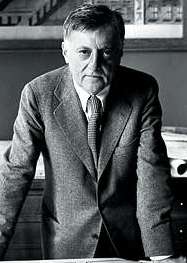
Beatrice Verasani · CC BY-SA 4.0
Aldo Rossi (3 May 1931 – 4 September 1997) was an Italian architect and designer who achieved international recognition in four distinct areas: architectural theory, drawing and design and also product design. He was one of the leading proponents of the postmodern movement. He was the first Italian to receive the Pritzker Prize for architecture.
- born
- 3 May 1931, Milan, Italy
- died
- 4 September 1997, Milan, Italy
- field
- Architecture, design, architectural theory
- nationality
- Italian
- known_for
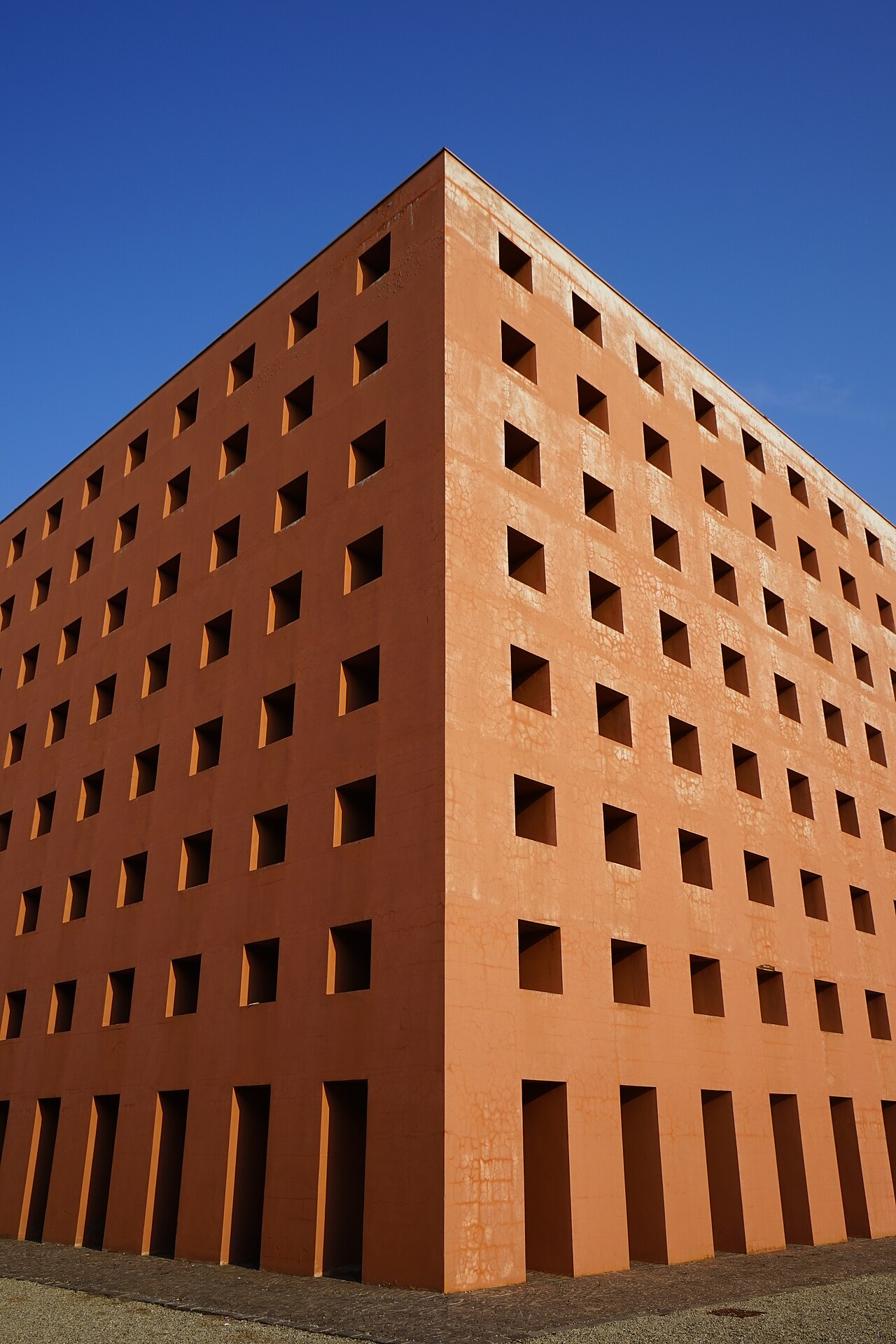
- Postmodern architecture, The Architecture of the City, San Cataldo Cemetery
Verified Timeline
Lore & Background
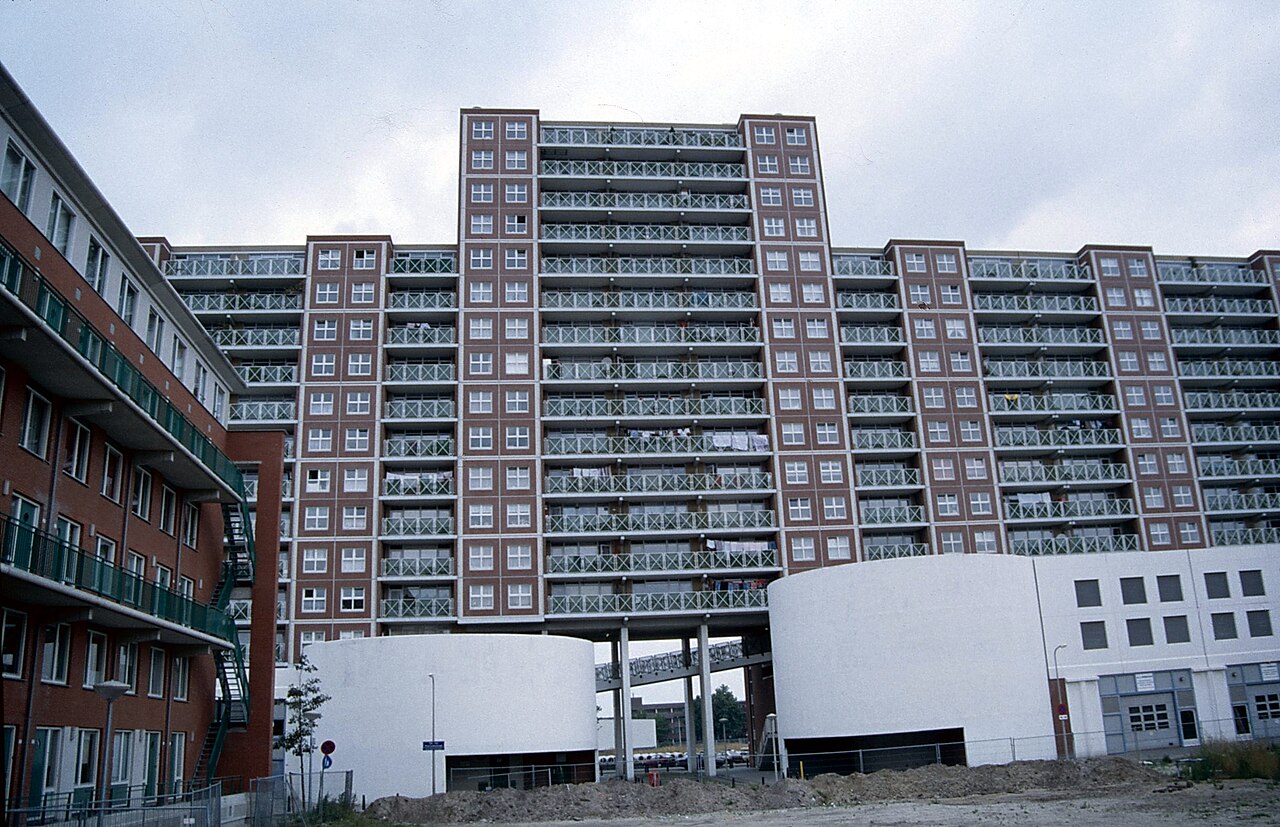
Aldo Rossi was born in Milan, Italy. After early education by the Somascan Religious Order and then at Alessandro Volta College in Lecco in 1949, he went to the school of architecture at the Polytechnic University of Milan. His thesis advisor was Piero Portaluppi and he graduated in 1958. In 1955, he had started writing for, and from 1959 was one of the editors of, the architectural magazine Casabella-Continuità, with the editor in chief Ernesto Nathan Rogers. Rossi left in 1964 when the chief editorship went to Gian Antonio Bernasconi. Rossi went on to work for Società magazine and Il_contemporaneo. He married the Swiss actress Sonia Gessner, who introduced him to the world of film and theatre. His son Fausto was active in movie-making both in front of and behind the camera. His daughter Vera was involved with theatre. He began his professional career at the studio of Ignazio Gardella in 1956, moving on to the studio of Marco Zanuso. In 1963 also he began teaching, firstly as an assistant to Ludovico Quaroni at the school of urban planning in Arezzo, then to Carlo Aymonino at the Institute of Architecture in Venice. In 1965, he was appointed lecturer at the Polytechnic University of Milan, and the following year he published The Architecture of the City, which soon became a classic of architectural literature. His professional career took a huge leap forward when Aymonino allowed Rossi to design part of the Monte Amiata complex in the Gallaratese quarter of Milan. In 1971, he won the design competition for the extension of the San Cataldo Cemetery in Modena, which made him internationally famous. After suspension from teaching in Italy, he moved to ETH Zurich, occupying the chair in architectural design from 1971 to 1975. In 1979, he was made a member of the prestigious Academy of Saint Luke. He taught at several universities in the United States, including Cooper Union in New York City and Cornell University in Ithaca. In 1981, he published his autobiography, A scientific autobiography. In 1990, he was awarded the Pritzker Prize. He died in Milan on 4 September 1997, following a car accident.
Reader's Guide
Aldo Rossi's significance lies in his dual role as a theorist and practitioner who shaped postmodern architecture. His book The Architecture of the City (1966) argued that a city must be studied and valued as something constructed over time; of particular interest are urban artifacts that withstand the passage of time. Rossi held that the city remembers its past (our 'collective memory'), and that we use that memory through monuments; that is, monuments give structure to the city. His built work, notably the San Cataldo Cemetery in Modena—referred to as a 'city of the dead'—exemplified his repetitive postmodernist design, though it also drew criticism for focusing too much on 'monumental collectivity' over individualism. Rossi's influence extended beyond architecture to product design, including the La Cupola espresso maker for Alessi, which came out in 1988. He was the first Italian to receive the Pritzker Prize (1990), and his awards include the Thomas Jefferson Medal in Public Architecture from the American Institute of Architects (1991) and honorary membership in the American Academy of Arts and Letters (1996). Posthumously, his proposals won the 1999 competition for the restoration of the Teatro La Fenice in Venice, and the Faculty of Architecture of the University of Bologna in Cesena was named after him in 1999. His legacy endures through his writings, buildings, and the ongoing completion of the San Cataldo Cemetery.
Did You Know?
- Aldo Rossi was the first Italian to receive the Pritzker Prize for architecture, awarded in 1990.
- His book The Architecture of the City (1966) soon became a classic of architectural literature.
- He designed a floating 250-seat Teatro del Mondo for the Venice Biennale in 1980.
- Rossi's La Cupola espresso maker for Alessi came out in 1988.
- He died in Milan on 4 September 1997 following a car accident.
Gallery
Frequently Asked Questions
Who is Aldo Rossi?
Aldo Rossi was an Italian architect, designer, and architectural theorist born in Milan in 1931 who became one of the defining voices of postmodern architecture. His work spanned theory, drawing, design, and product design, earning him international recognition across all four fields.
What is Aldo Rossi most known for?
He is best remembered for his influential theoretical book, his design of the San Cataldo Cemetery in Genoa, and his contributions to product design. His ideas helped steer the postmodern movement in European architecture and influenced a generation of practitioners.
Did Aldo Rossi win the Pritzker Prize?
Yes — he became the first Italian architect ever to receive the Pritzker Prize, the field's highest international honor. This award cemented his reputation as a global figure in the discipline.
What is 'The Architecture of the City' by Aldo Rossi?
It is his seminal theoretical text examining how urban form, collective memory, and architectural design interrelate. The book went on to become a cornerstone reference for postmodern and neo-rationalist architects around the world.
When and where did Aldo Rossi die?
He passed away on 4 September 1997 in Milan, the same city where he had been born in 1931. He was 66 years old at the time of his death.
More in Architects 1-24
Spotted an error? Know more?
This is a living reference — every entry is fact-audited, and reader corrections feed straight into our audit queue. Suggest an edit · See this site's audit record