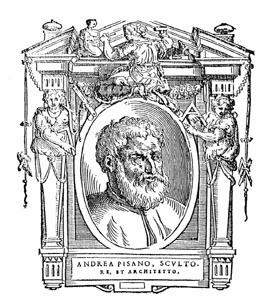
Andrea Pisano
Italian sculptor and architect of the 14th century.

via Wikipedia: Andrea Pisano · see source
Andrea Pisano, also known as Andrea da Pontedera, was an Italian sculptor and architect. Born in Pontedera in 1290, he initially learned the trade of a goldsmith before becoming an apprentice of Mino di Giovanni around 1300. He produced his main works in Florence, where it is assumed Giotto was eventually more influential on his style than his earlier teacher. Pisano is best known for creating the first of the three bronze doors of the Baptistery in Florence, working on this major project between 1330 and 1336. In 1340 he succeeded Giotto as Master of the Works of Florence's Cathedral, and in 1347 he became Master of the Works at Orvieto Cathedral. He died in 1348.
- died
- 1348, Orvieto
Lore & Background
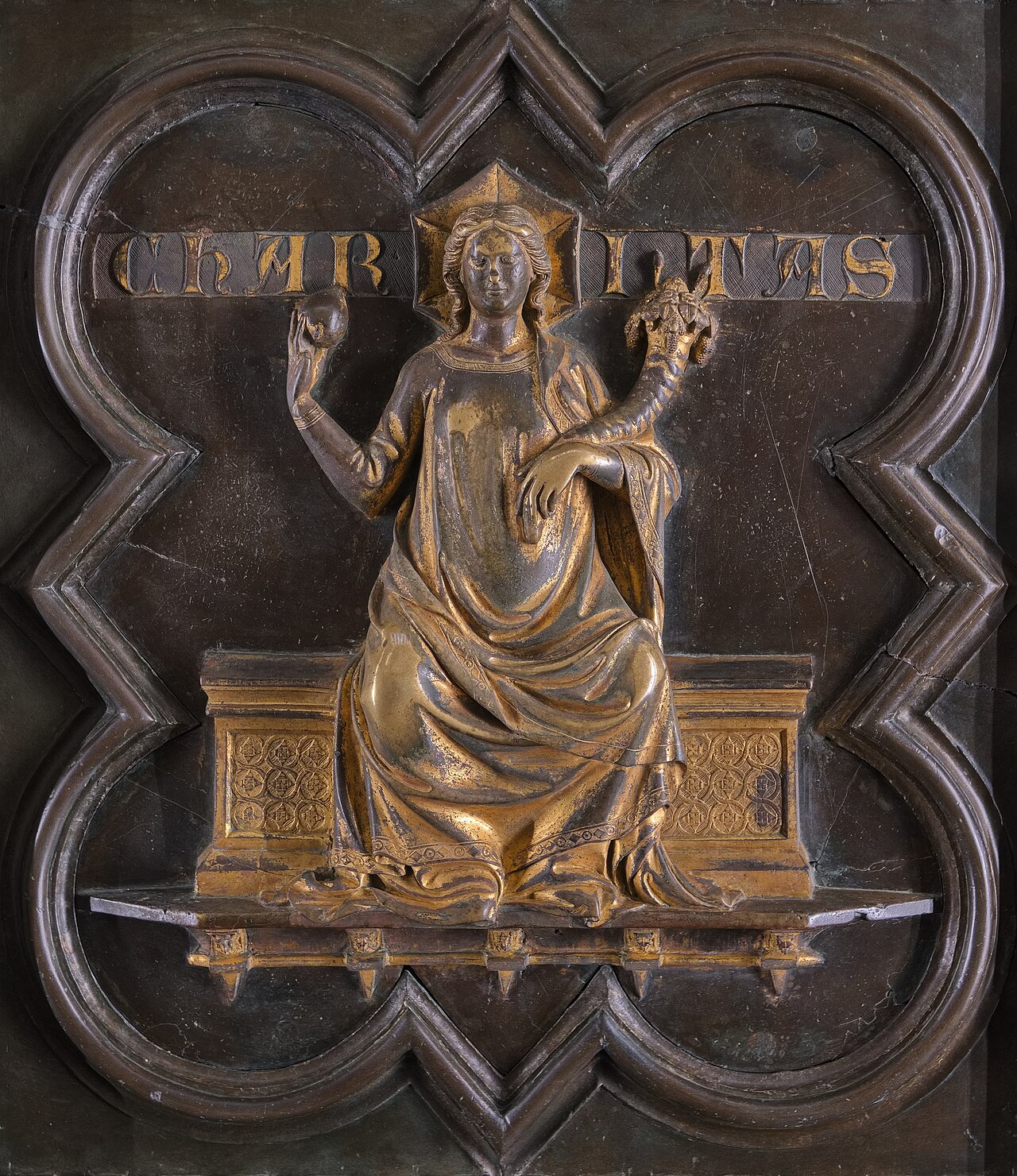
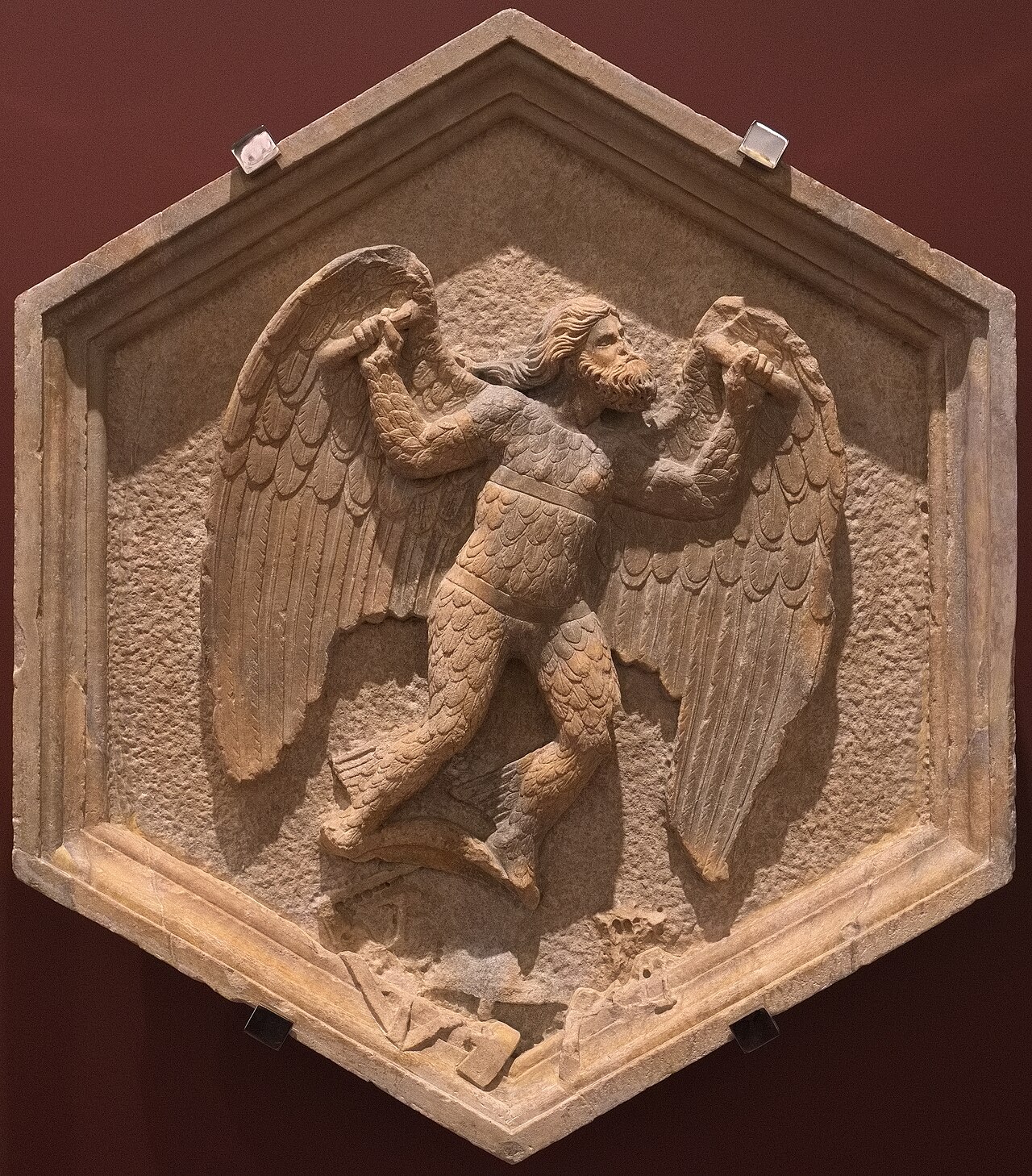
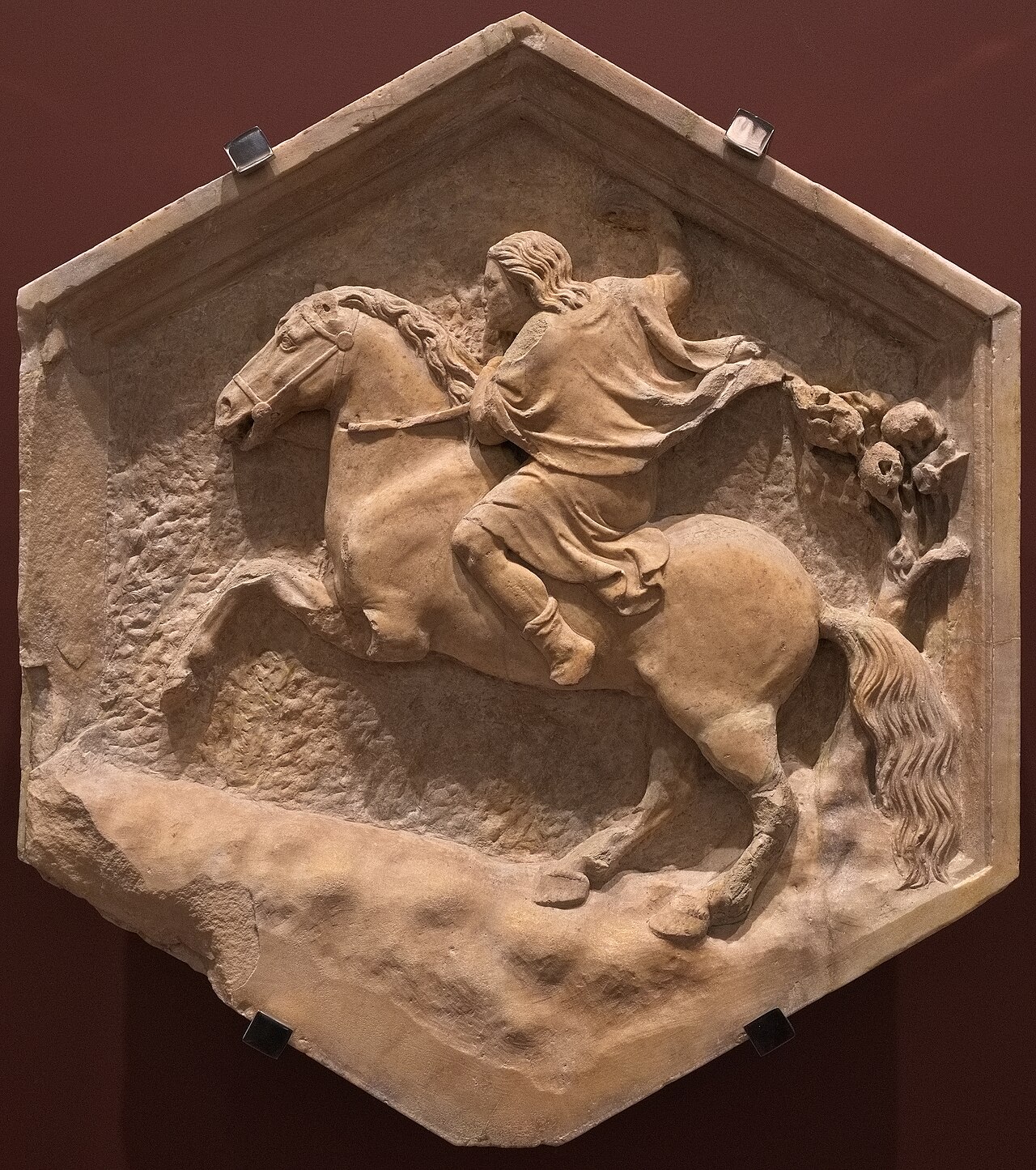
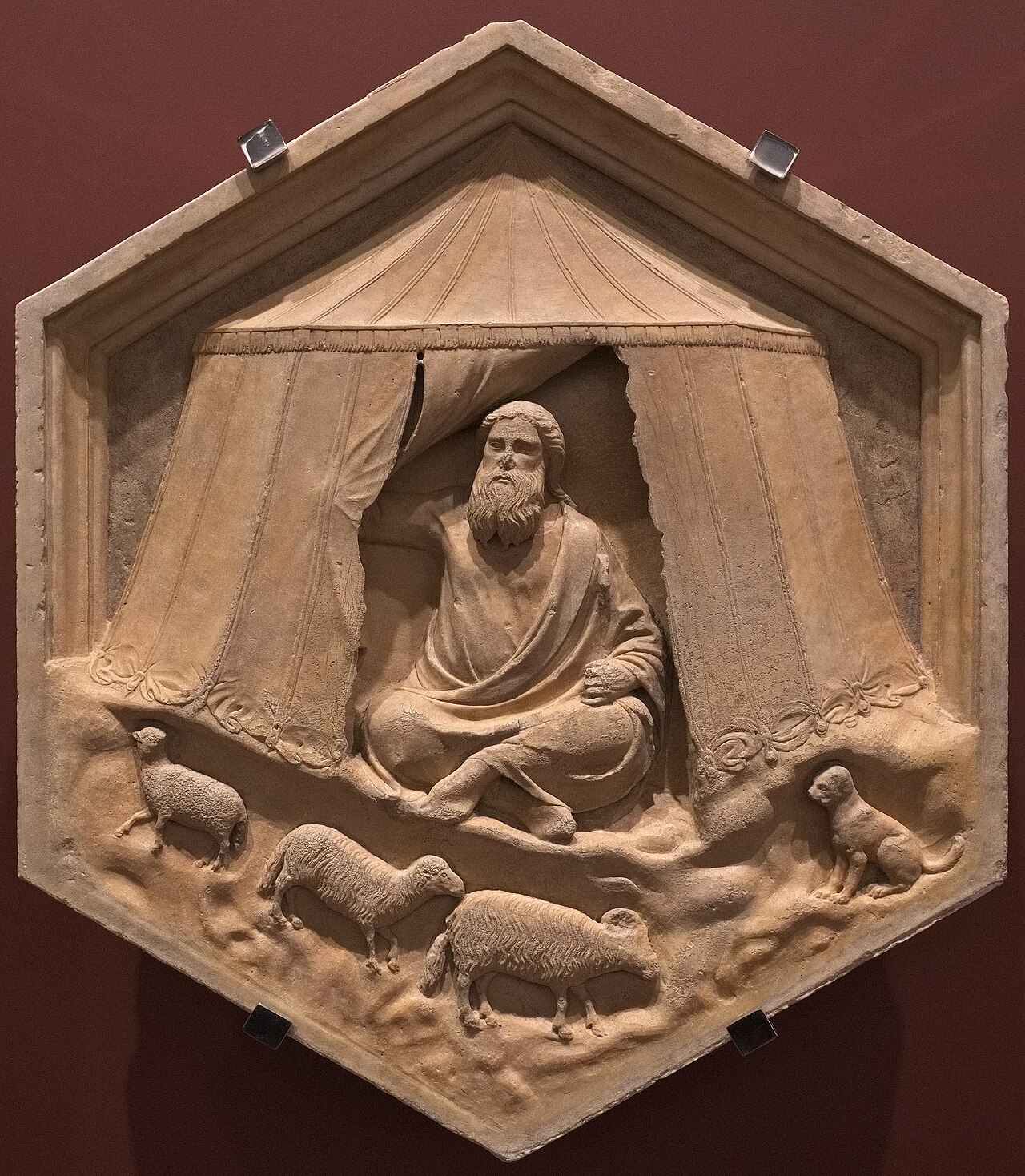
Andrea Pisano initially learned the trade of a goldsmith. He later became an apprentice of Mino di Giovanni, about 1300, and worked with him on the sculpture for Santa Maria della Spina at Pisa and elsewhere. He produced his main works in Florence. It is assumed that Giotto was eventually more influential on his style than his earlier teacher. He produced the first (now on the south side) of the three bronze doors of the Baptistery in Florence, preceding those of Lorenzo Ghiberti. He worked on this major project between 1330–1336. The door consists of a number of small quatrefoil panels, the lower eight containing single figures of the Virtues, and the rest scenes from the life of John the Baptist. Pisano, while living in Florence, also produced many important works of marble sculpture, all of which show Giotto's influence. In 1340 he succeeded Giotto as Master of the Works of Florence's Cathedral. There he produced a series of reliefs, possibly designed by his former teacher, including the double band of panel-reliefs which Pisano executed for the great campanile. The subjects of these are the Four Great Prophets, the Seven Virtues, the Seven Sacraments, the Seven Works of Mercy and the Seven Planets. The duomo contains the most important works of Pisano in marble (now in its museum). In 1347 he became Master of the Works at Orvieto Cathedral, which had already been designed and begun by Lorenzo Maitani. These and the cathedral's doors are Pisano's only surviving works. Pisano is known for contributing to freeing modern art from Byzantine influence. He died in 1348. He had two sons, Nino and Tommaso. Both eventually succeeded him as Master of the Works at Orvieto Cathedral. Giorgio Vasari includes a biography of Andrea Pisano in his Lives. Pisano's most famous apprentice was Andrea di Cione, better known as Andrea Orcagna. Another of his apprentices, Giovanni di Balduccio, executed the shrine of Sant'Eustorgio in Milan.
Reader's Guide
Andrea Pisano's significance lies in his role as a bridge between the Gothic and early Renaissance traditions in Italian sculpture. His bronze doors for the Florence Baptistery established a new standard for narrative relief work, using quatrefoil panels to tell the story of John the Baptist and depict the Virtues. By succeeding Giotto as Master of the Works of Florence's Cathedral, Pisano continued the integration of sculptural decoration with architecture, producing a series of allegorical and biblical reliefs for the campanile. His work is noted for contributing to freeing modern art from Byzantine influence. Pisano's legacy extended through his sons, Nino and Tommaso, who both succeeded him as Master of the Works at Orvieto Cathedral, and through his apprentices, including Andrea Orcagna and Giovanni di Balduccio. Giorgio Vasari included a biography of Pisano in his Lives, cementing his place in art history.
Did You Know?
- Andrea Pisano is also known as Andrea da Pontedera, after his birthplace.
- He produced the first of the three bronze doors of the Baptistery in Florence, working on it between 1330 and 1336.
- In 1340 he succeeded Giotto as Master of the Works of Florence's Cathedral.
- His two sons, Nino and Tommaso, both eventually succeeded him as Master of the Works at Orvieto Cathedral.
- Giorgio Vasari includes a biography of Andrea Pisano in his Lives.
From Goldsmith to Sculptor: Early Formation
Born in the Tuscan town of Pontedera around 1290, Andrea Pisano — also referred to as Andrea da Pontedera — began his artistic journey not in a sculptor's workshop but in the world of goldsmithing. This early immersion in precious metals and fine decorative craft would later inform his sensitivity to surface detail and small-scale composition. Around the year 1300, he entered the workshop of Mino di Giovanni, where he assisted on sculptural commissions including the facade of Santa Maria della Spina in Pisa and other projects. It was during this apprenticeship that he transitioned from metalwork to stone and bronze sculpture. Though Mino provided his foundational training, it was the broader Florentine artistic environment — and particularly the towering presence of Giotto — that ultimately shaped his mature style. Pisano settled in Florence, where he would produce the bulk of his career's most significant works, and his marble and bronze pieces consistently bear the imprint of Giotto's dramatic, narrative-driven approach to form.
The Baptistery Door: A Bronze Masterpiece
Between 1330 and 1336, Pisano undertook what remains one of the defining achievements of Italian sculpture: the first of the three bronze doors for the Baptistery in Florence, now mounted on its south side. This commission placed him directly in the lineage that would later produce Lorenzo Ghiberti's celebrated panels, making Pisano's door the pioneering entry in a tradition of monumental bronze narrative. The composition is organized into a series of small quatrefoil panels rather than large rectangular scenes. The eight lower panels each present a single allegorical figure representing one of the Virtues, while the remaining panels depict episodes drawn from the life of John the Baptist. The choice of a sacred, evangelistic subject for a baptisterial entrance underscores the theological program of the building. The work demonstrates Pisano's ability to render complex human figures in bronze at a relatively intimate scale, a skill rooted in his goldsmithing origins yet elevated by the sculptural ambition of the commission.
Master of the Works: Cathedral Commissions
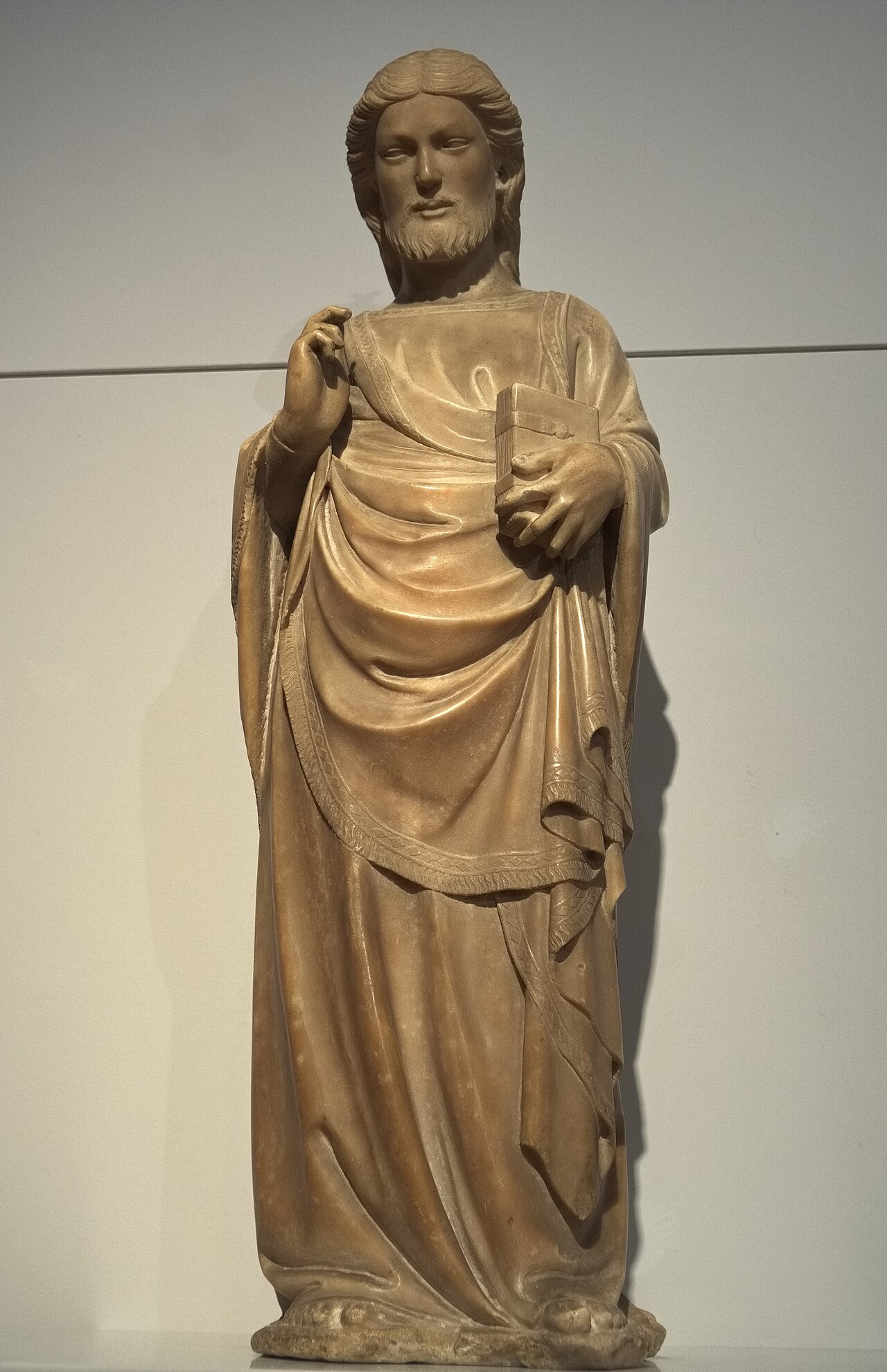
In 1340, Pisano assumed the prestigious post of Master of the Works for Florence's Cathedral, succeeding none other than Giotto himself. In that capacity he produced a remarkable series of marble reliefs, some of which were possibly designed by his former teacher before being executed by Pisano's hands. Among the most ambitious of these is the double band of panel-reliefs he carved for the great campanile, whose subjects span an extraordinary theological and cosmological program: the Four Great Prophets, the Seven Virtues, the Seven Sacraments, the Seven Works of Mercy, and the Seven Planets. The duomo still houses what are considered his most important marble works, now preserved in its museum. Two years later, in 1347, he was appointed to the same master-of-works role at Orvieto Cathedral, a project already designed and begun by Lorenzo Maitani. The reliefs and doors he added there constitute the only surviving works of Pisano at that site. He died in Orvieto the following year, in 1348.
Legacy: Breaking from Byzantine Tradition and Training a New Generation
Pisano's broader significance lies in his role in liberating Italian art from the conventions of Byzantine style, helping to establish a new artistic language distinct from that inherited tradition. His influence extended well beyond his own body of work. Among his apprentices was Andrea di Cione, better known as Andrea Orcagna, identified as his most famous pupil. Another student, Giovanni di Balduccio, executed the shrine of Sant'Eustorgio in Milan, carrying forward the sculptural vocabulary Pisano had helped establish. Even after his death in 1348, his institutional legacy endured: his two sons, Nino and Tommaso, both eventually succeeded him as Master of the Works at Orvieto Cathedral, ensuring that the workshop's methods and aesthetic sensibilities continued to shape that building's decoration. The biographer Giorgio Vasari devoted a chapter to Pisano in his Lives, confirming that his reputation as a foundational figure in Italian sculpture had already been firmly established by the time of Vasari's writing.
Gallery
Frequently Asked Questions
Who is Andrea Pisano?
Andrea Pisano, also referred to as Andrea da Pontedera, was a 14th-century Italian sculptor and architect. He worked primarily in Florence during the early 1300s.
What is Andrea Pisano best known for?
He is most celebrated for designing the first set of bronze doors on the Florence Baptistery. He also took over from Giotto as the Master of the Works overseeing Florence Cathedral.
What role did Andrea Pisano hold in Florence's cathedral project?
He succeeded Giotto as head of the Opera del Duomo, the governing body responsible for Florence Cathedral's construction. In that capacity he directed both architectural and decorative efforts for the cathedral complex.
When and where did Andrea Pisano die?
He passed away in 1348, most likely in Florence, though some accounts place his death in Pisa.
Why is Andrea Pisano considered significant in art history?
His bronze Baptistery doors established a new benchmark for narrative relief sculpture in Italy. His work helped bridge late Gothic traditions and the emerging Renaissance sensibility that would define Florentine art.
More in Architects 1-24
Spotted an error? Know more?
This is a living reference — every entry is fact-audited, and reader corrections feed straight into our audit queue. Suggest an edit · See this site's audit record