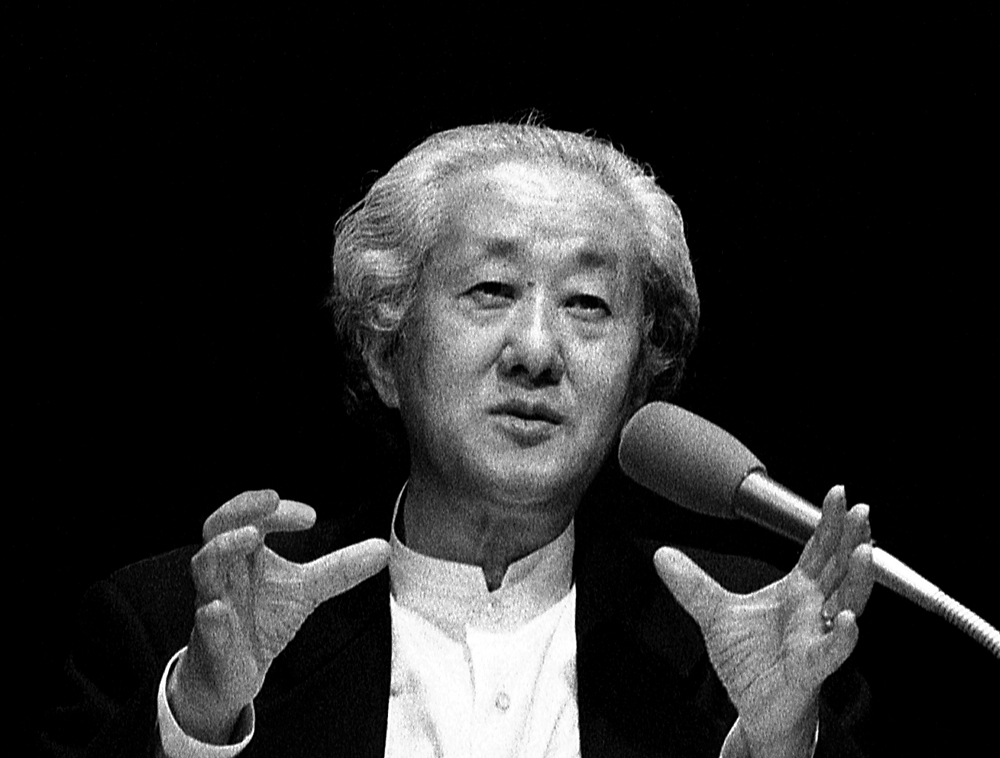
Arata Isozaki
Japanese architect who refused to be stuck in one style.

via Wikipedia: Arata Isozaki · see source
Arata Isozaki (23 July 1931 – 28 December 2022) was a Japanese architect, urban designer, and architectural theorist from Ōita. He was awarded the Royal Gold Medal in 1986 and the Pritzker Architecture Prize in 2019. He taught at Columbia University, Harvard University, and Yale University. His best-known work in the U.S. is the Museum of Contemporary Art (MOCA) in Los Angeles, completed in 1986. He also designed the interior of New York City's Palladium nightclub in 1985 and the Palau Sant Jordi, the main indoor venue for the 1992 Summer Olympics in Barcelona.
- born
- 23 July 1931
- died
- 28 December 2022
- field
- Architecture, urban design, architectural theory
- nationality
- Japanese
- known_for
- Pritzker Prize (2019), Museum of Contemporary Art (MOCA) Los Angeles, Palau Sant
Verified Timeline
Lore & Background
Isozaki was born in Ōita on the island of Kyushu, the eldest of four children of Toji and Tetsu Isozaki. His father was a prominent businessman. In 1945, he witnessed the destruction of Hiroshima from the shore opposite his hometown. When he accepted the Pritzker Prize in 2019 he stated: 'There was no architecture, no buildings, and not even a city. So my first experience of architecture was the void of architecture, and I began to consider how people might rebuild their homes and cities.' He completed his schooling at the Oita Prefecture Oita Uenogaoka High School. In 1954, he graduated from the University of Tokyo majoring in Architecture and Engineering, and completed a doctoral program in architecture from the same university in 1961. Isozaki was a student of Kenzo Tange's from 1952 to 1954, at which point he joined Tange's studio as an assistant and collaborator. He established his own firm, Arata Isozaki and Associates, in 1963, though he continued to collaborate with Tange until 1975. Isozaki was asked to contribute to the original Metabolist manifesto, 'Metabolism' (1960) though he declined. He is often associated with the movement, though his work came from a philosophical antithesis. In 1962 he published a critique of post-war urban growth, 'City Demolition Industry, Inc.,' a surreal fiction from the perspective of an assassin who no longer takes pleasure in his job, since cities themselves so efficiently do his job for him. In spite of his refusal to participate in the initial 1960 manifesto, Isozaki later participated in the 1962 metabolist exhibition, 'This Will Be Your City' in Tokyo. His early projects were influenced by European experiences with a style mixed between 'New Brutalism' and 'Metabolist Architecture' (Oita Medical Hall, 1959–1960), according to Reyner Banham. His style continued to evolve with buildings such as the Fujimi Country Club (1973–74) and Kitakyushu Central Library (1973–74). Later he developed a more modernistic style with buildings such as the Art Tower of Mito (1986–90) and Domus-Casa del Hombre (1991–1995) in Galicia, Spain. In 1983, he supported an apparently unbuildable entry for a sports club in Hong Kong by the then-unknown architect Zaha Hadid. In 2005, Arata Isozaki founded the Italian branch of his office, Arata Isozaki & Andrea Maffei Associates. Two major projects from this office are the Allianz Tower CityLife office tower in Milan and the new Town Library in Maranello, Italy.
Reader's Guide
Arata Isozaki's significance lies in his refusal to be confined to a single architectural style, instead producing designs that were specific solutions born out of each project's context. His career spanned from postwar Japan to international acclaim. He taught at Columbia University, Harvard University, and Yale University. His best-known work in the United States is the Museum of Contemporary Art (MOCA) in Los Angeles, completed in 1986. He also supported the then-unknown Zaha Hadid in 1983 by backing her apparently unbuildable entry for a sports club in Hong Kong. In 2005, he founded the Italian branch of his office, Arata Isozaki & Andrea Maffei Associates, which produced projects such as the Allianz Tower in Milan and the new Town Library in Maranello, Italy. His legacy includes a wide range of buildings across Japan, Europe, the United States, Australia, and Asia, and his receipt of the Pritzker Prize in 2019 capped a career that had also earned him the Royal Gold Medal in 1986, the Golden Lion at the 6th Venice Biennale of Architecture in 1996, and the European Cultural Centre Architecture Award in 2012.
Did You Know?
- Isozaki witnessed the destruction of Hiroshima in 1945 from the shore opposite his hometown, which he later called his first experience of architecture—'the void of architecture.'
- He was asked to contribute to the original Metabolist manifesto in 1960 but declined, though he later participated in the 1962 metabolist exhibition 'This Will Be Your City.'
- In 1962 he published a surreal fiction titled 'City Demolition Industry, Inc.,' narrated by an assassin who no longer enjoys his job because cities demolish themselves so efficiently.
- In 1983, he supported an apparently unbuildable competition entry for a sports club in Hong Kong by the then-unknown architect Zaha Hadid.
- He founded the Italian branch of his office, Arata Isozaki & Andrea Maffei Associates, in 2005, which produced the Allianz Tower in Milan and the new Town Library in Maranello.
The Void That Shaped a Career
Arata Isozaki entered the world on 23 July 1931 in Ōita, a port city on the island of Kyushu. He was the eldest of four children born to Toji and Tetsu Isozaki, his father a prominent businessman. The defining trauma of his youth arrived in 1945, when the atomic bombing of Hiroshima was visible from the shore opposite his hometown. Decades later, while accepting the Pritzker Architecture Prize, he recalled that moment as his first encounter with architecture—not a building, but its total absence. He described seeing no structures, no city at all, and from that void he began thinking about how communities might reconstruct themselves. He completed his secondary education at Ōita Uenogaoka High School, then moved to Tokyo, where he earned a degree in Architecture and Engineering from the University of Tokyo in 1954 and a doctorate from the same institution in 1961. Between 1952 and 1954 he studied under Kenzo Tange and subsequently joined Tange's studio as an assistant and collaborator, a relationship that would shape his professional identity for over a decade.
A Metabolist at Arm's Length
Isozaki occupies a peculiar position in the history of Japanese architectural movements. In 1960 he was asked to contribute to the original Metabolism manifesto and he refused, yet his name remains inseparable from the movement. The distinction mattered to him: his engagement with Metabolism grew from what he saw as a philosophical antithesis rather than a shared program. In 1962 he published 'City Demolition Industry, Inc.,' a surreal short fiction narrated by an assassin who has grown bored of his trade because cities themselves demolish so efficiently that his work has become redundant. It was a pointed critique of postwar urban expansion. Despite his earlier refusal to sign the manifesto, he did participate in the 1962 Metabolist exhibition titled 'This Will Be Your City' in Tokyo. Professionally, he established his own practice, Arata Isozaki and Associates, in 1963, though he continued collaborating with Kenzo Tange's studio until 1975. His early built work, such as the Ōita Medical Hall (1959–1960), blended New Brutalist and Metabolist sensibilities, a hybrid that critic Reyner Banham noted in his writings.
A Career Without a Single Style
Isozaki's built portfolio spans six decades and multiple continents, and he consistently resisted being pinned to a single aesthetic. After the early hybrid of Brutalism and Metabolism, his work shifted through the Fujimi Country Club and Kitakyushu Central Library (both 1973–74) into a more modernistic register visible in the Art Tower of Mito (1986–90) and Domus: La Casa del Hombre in A Coruña, Spain (1991–1995). His international reach expanded rapidly: the Museum of Contemporary Art in Los Angeles (completed 1986) became his best-known American work, followed by Palau Sant Jordi, the main indoor venue for the 1992 Barcelona Olympics. In 1983 he championed an apparently unbuildable competition entry by the then-unknown Zaha Hadid for a sports club in Hong Kong, and in 1985 he designed the interior of New York's Palladium nightclub. Later projects carried him to Shenzhen, Ho Chi Minh City, Thessaloniki, Doha, and beyond. Observers noted that each design emerged as a specific response to its site and program rather than an application of a fixed vocabulary.
Recognition, Teaching, and the Final Chapter
The international architectural community recognized Isozaki's contributions with an extraordinary sequence of honors. He received the Royal Gold Medal from the RIBA in 1986, the Golden Lion at the 6th Venice Biennale of Architecture in 1996, and the European Cultural Centre Architecture Award in 2012. The Pritzker Architecture Prize, awarded in 2019, capped a career that had also earned him the Mainichi Art Award, the Arnold W. Brunner Memorial Prize, the AIA Honor Award, and numerous other distinctions. Beyond design, he held teaching positions at Columbia University, Harvard University, and Yale University, passing his ideas to successive generations of students. In 2005 he founded the Italian branch of his practice, Arata Isozaki & Andrea Maffei Associates, which delivered the Allianz Tower CityLife office tower in Milan's former trade fair district and a new town library in Maranello. Arata Isozaki died on 28 December 2022 at the age of ninety-one, closing a career that began in the shadow of a destroyed city and ended with a body of work scattered across the globe.
Gallery
Frequently Asked Questions
Who is Arata Isozaki?
He was a Japanese architect, urban designer, and architectural theorist born in Ōita on 23 July 1931. He died on 28 December 2022, leaving behind a career that spanned nearly six decades of practice and writing.
What are Arata Isozaki's most famous buildings?
Two of his most widely recognized projects are the Museum of Contemporary Art in Los Angeles and the Palau Sant Jordi arena in Barcelona. Both showcase his talent for pairing bold structural ideas with highly functional public spaces.
What architectural styles did Arata Isozaki work in?
He deliberately avoided committing to any single style over the course of his career. His early work drew on New Brutalism and the Metabolist movement, while his later designs shifted toward a more restrained, modernist vocabulary.
What major awards did Arata Isozaki receive?
He was given the Royal Gold Medal in 1986 and, more than three decades later, the Pritzker Architecture Prize in 2019. Together these honors recognize both his long-standing international influence and his late-career contributions to the field.
Why is Arata Isozaki important to architecture?
His refusal to be pinned to one aesthetic made him a bridge between the experimental Metabolist era of the 1960s and the more measured modernism that followed. Fans and scholars often point to his versatility as a model for how an architect can keep evolving across a long career.
More in Architects 1-24
Spotted an error? Know more?
This is a living reference — every entry is fact-audited, and reader corrections feed straight into our audit queue. Suggest an edit · See this site's audit record