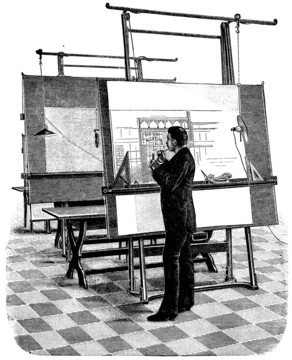
Carlo Maderno
Italian architect, a father of Baroque architecture.

via Wikipedia: Carlo Maderno · see source
Carlo Maderno (1556 – 31 January 1629) was an Italian architect, born in today's Ticino, Switzerland, who is remembered as one of the fathers of Baroque architecture. His façades of Santa Susanna, St. Peter's Basilica, and Sant'Andrea della Valle were of key importance in the evolution of the Italian Baroque. He often is referred to as the brother of sculptor Stefano Maderno, but this is not universally agreed upon.
- born
- 1556, Capolago, today's Ticino, Switzerland
- died
- 31 January 1629, Rome
- field
- Architecture
- nationality
- Italian
- known_for
- Façades of Santa Susanna, St. Peter's Basilica, and Sant'Andrea della Valle; key
Lore & Background
Born in Capolago, in today's Ticino, which at the time was a bailiwick of the Swiss Confederacy, Maderno began his career in the marble quarries of the far north, before moving to Rome in 1588 with four of his brothers to assist his uncle Domenico Fontana. He worked initially as a marble cutter. This background in sculptural workmanship would help mould his architecture. His first solo project, in 1596, was an utterly confident and mature façade for the ancient church of Santa Susanna (1597–1603); it was among the first Baroque façades to break with the Mannerist conventions that are exemplified in the Gesù. The structure is a dynamic rhythm of columns and pilasters, with a protruding central bay and condensed central decoration add complexity to the structure. The Santa Susanna façade won the attention of Pope Paul V, who appointed him chief architect of St. Peter's. Maderno was forced to modify Michelangelo's plans for the Basilica and provide designs for an extended nave with a palatial façade. The façade (completed in 1612) is constructed to allow for Papal blessings from the emphatically enriched balcony above the central door. Most of Maderno's work continued to be the remodelling of existing structures. The only building designed by Maderno (except for the facade) and completed under his supervision was the layout and interior Santa Maria della Vittoria (1608–20). Even Maderno's masterpiece, the church of Sant'Andrea della Valle, is not entirely his. There he designed the façade and executed the dome, the third largest in Rome after St. Peter's and the Pantheon. At Maderno's death, the façade remained only half-built; it was completed to Maderno's original conception by Carlo Fontana. His other works include the Roman churches of Gesù e Maria (although this is disputed), San Giacomo degli Incurabili, Santa Lucia in Selci. After the death of Giacomo della Porta in 1602, Moderno took over the work at San Giovanni dei Fiorentini (where he is buried). He directed the construction of the dome and the main body of the church. In addition, he worked on the Quirinal Palace, the Papal Palace of Castel Gandolfo and the Palazzo Barberini for the Barberini Pope Urban VIII (1628 and completed 1633; much remodeled since). In the Palazzo Barberini at Quattro Fontane, Maderno's work is overshadowed at times by details added by Bernini and Borromini, whose works were influenced by Maderno. His design of palaces is best represented by his design of Palazzo Mattei (1598–1618). Maderno was called upon to design chapels within existing churches: the Chapel of St. Lawrence in San Paolo fuori le Mura and the Cappella Caetani in Santa Pudenziana. He designed the base supporting the Marian column in front of Basilica di Santa Maria Maggiore, which later served as a model for numerous Marian columns. At Ferrara, he designed the fortifications. The last work by Maderno at St. Peter's was a crypt-like space under the dome that is referred to as the 'Confessio'. From there, privileged persons such as cardinals could descend in order to be near the burial place of Saint Peter. Its marble steps are remnants of the old basilica. Around the balustrade of the Confessio are 95 bronze lamps that remain lit perpetually. Maderno died in Rome on 31 January 1629, at the age of 73; his body was buried in the church of San Giovanni dei Fiorentini.
Reader's Guide
Carlo Maderno's significance lies in his role as a transitional figure who helped define the Baroque style in architecture. His façade for Santa Susanna introduced a dynamic rhythm of columns and pilasters with a protruding central bay, breaking from Mannerist conventions and establishing a model for later Baroque façades. At St. Peter's, his extension of the nave and construction of the façade, though criticized for blocking the view of Michelangelo's dome, created the iconic space for papal blessings and completed the basilica's present form. His work on Sant'Andrea della Valle, particularly the dome and façade, further developed the Baroque vocabulary with increased movement, depth, and chiaroscuro. Maderno's legacy is also seen in his influence on later architects such as Bernini and Borromini, whose works were influenced by Maderno. Despite often being overshadowed by these successors, Maderno's contributions to Roman architecture—from churches to palaces—were foundational to the Baroque movement.
Did You Know?
- Maderno began his career in the marble quarries of the far north before moving to Rome in 1588.
- His first solo project was the façade for the ancient church of Santa Susanna (1597–1603), among the first Baroque façades to break with Mannerist conventions.
- The dome of Sant'Andrea della Valle, executed by Maderno, is the third largest in Rome after St. Peter's and the Pantheon.
- The last work by Maderno at St. Peter's was the Confessio, a crypt-like space under the dome with 95 bronze lamps that remain lit perpetually.
- Maderno is buried in the church of San Giovanni dei Fiorentini, where he directed the construction of the dome and main body.
From Marble Quarries to Roman Architect
Carlo Maderno was born in 1556 in Capolago, in today's Ticino, which at the time was a bailiwick of the Swiss Confederacy. His earliest professional experience came not in a drawing studio but in the marble quarries of the far north, where he learned the physical language of stone. In 1588 he relocated to Rome alongside four of his brothers, joining the workshop of his uncle, the architect Domenico Fontana. There he began as a marble cutter, a hands-on role that would prove decisive for his later architectural sensibility. This grounding in sculptural workmanship gave him an intimate understanding of material, weight, and surface that permeated every façade he would go on to design. His relationship to the sculptor Stefano Maderno is often described as that of brothers, though this familial link is not universally accepted by scholars. Maderno's Swiss origins and quarry training set him apart from the Roman-born architects of his era and lent his work a tactile, three-dimensional quality that would become a hallmark of the emerging Baroque idiom.
The Santa Susanna Façade and the Birth of a New Language
In 1596 Maderno undertook what would become his defining early achievement: the façade of the ancient church of Santa Susanna, a project completed between 1597 and 1603. The result was, by all accounts, an utterly confident and mature composition that shattered the Mannerist conventions still embodied in the façade of the Gesù. Where earlier designs treated the church front as a relatively flat, hierarchical arrangement, Maderno introduced a dynamic interplay of columns and pilasters, a boldly protruding central bay, and a condensed cluster of ornament at the center that added genuine complexity to the structure. There was an incipient playfulness with the rules of classical design, yet the composition never lost its underlying rigour. This façade caught the eye of Pope Paul V, who subsequently appointed Maderno as chief architect of St. Peter's Basilica, launching the most consequential chapter of his career. The Santa Susanna front thus stands as a watershed moment, one of the first structures to articulate the spatial and rhythmic vocabulary that would come to define the Italian Baroque.
St. Peter's and the Controversy of the Nave
Following his appointment by Pope Paul V, Maderno faced the enormous challenge of extending St. Peter's Basilica. He was compelled to modify Michelangelo's original Greek-cross plan, adding a long nave and a palatial façade that was completed in 1612. The façade was specifically engineered to accommodate Papal blessings delivered from an emphatically enriched balcony above the central doorway. Yet this forward extension, transforming the building from a Greek cross into a Latin cross, has drawn persistent criticism for obscuring the view of the dome when seen from the Piazza. Detractors, however, often overlook the fact that the straight approaching avenue is a modern addition, not the medieval approach Maderno would have anticipated. Moreover, Maderno enjoyed considerably less creative freedom on this commission than on his other projects, working within the constraints of an existing structure and papal expectations. His final contribution to the basilica was the Confessio, a crypt-like space beneath the dome where privileged figures such as cardinals could descend to be near the burial place of Saint Peter, its marble steps salvaged from the old basilica and its balustrade ringed by 95 perpetually lit bronze lamps.
Sant'Andrea della Valle and a Lasting Architectural Legacy
Perhaps no single building better illustrates both Maderno's genius and the collaborative nature of his practice than Sant'Andrea della Valle. The church's cruciform plan, with its wide nave and chapels beyond arched openings, had been conceived in 1540 by Grimaldi and Giacomo della Porta for the Theatines. Maderno's contributions were the façade and the execution of the dome, the third largest in Rome after those of St. Peter's and the Pantheon. Construction on his elements ran from 1621 to 1625, and the dome, set atop a high windowed drum, was frescoed by Giovanni Lanfranco. At the time of Maderno's death in January 1629, the façade remained only half-finished; it was later completed by Carlo Fontana following Maderno's original conception. In that façade, the standard formula established at the Gesù is pushed further: varying planes of frieze and cornice create greater movement and depth, while whole columns embedded in snug dark recesses produce heightened chiaroscuro. Beyond this single church, Maderno's influence radiated outward—Bernini and Borromini both drew on his ideas, and his designs for the Marian column at Santa Maria Maggiore, the Quirinal Palace, Castel Gandolfo, and Palazzo Mattei cemented his standing as a father of Baroque architecture.
Gallery
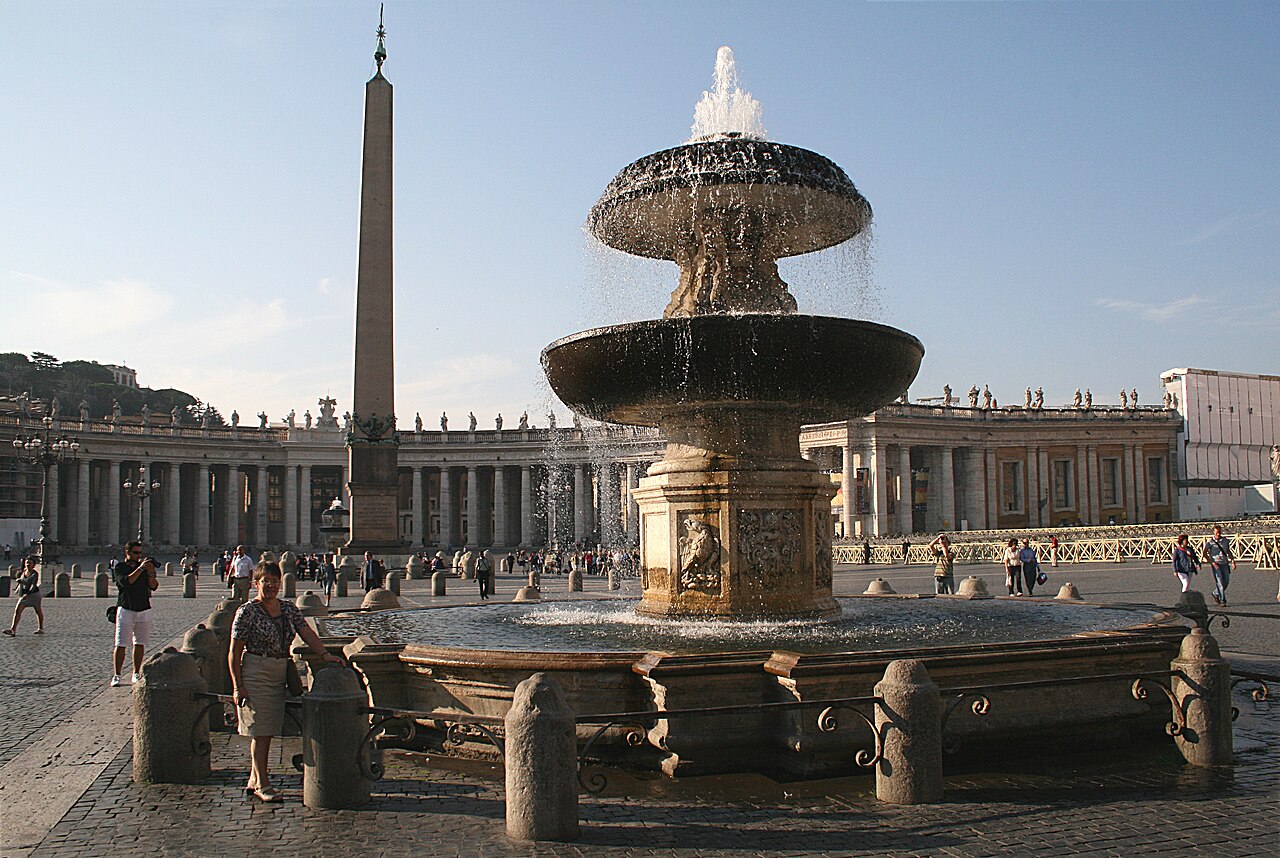
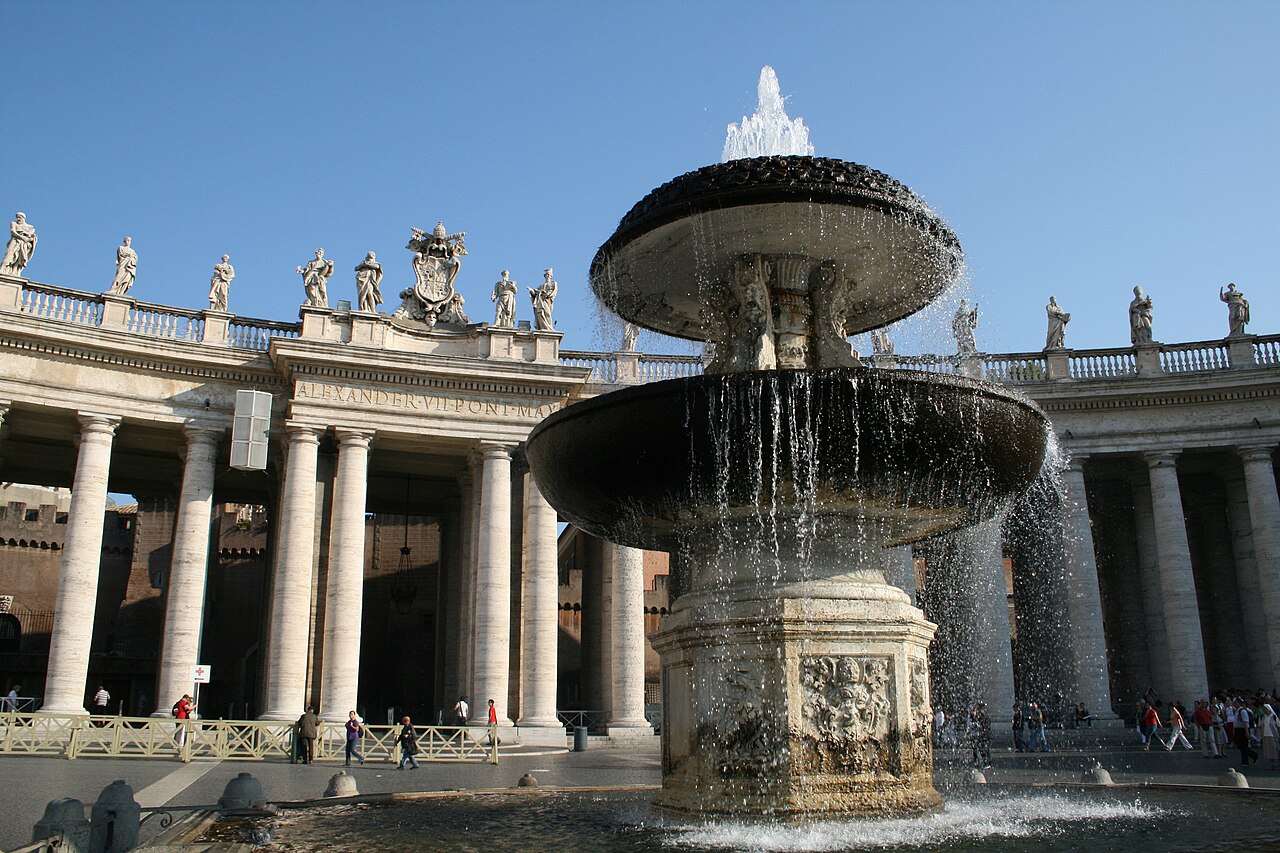
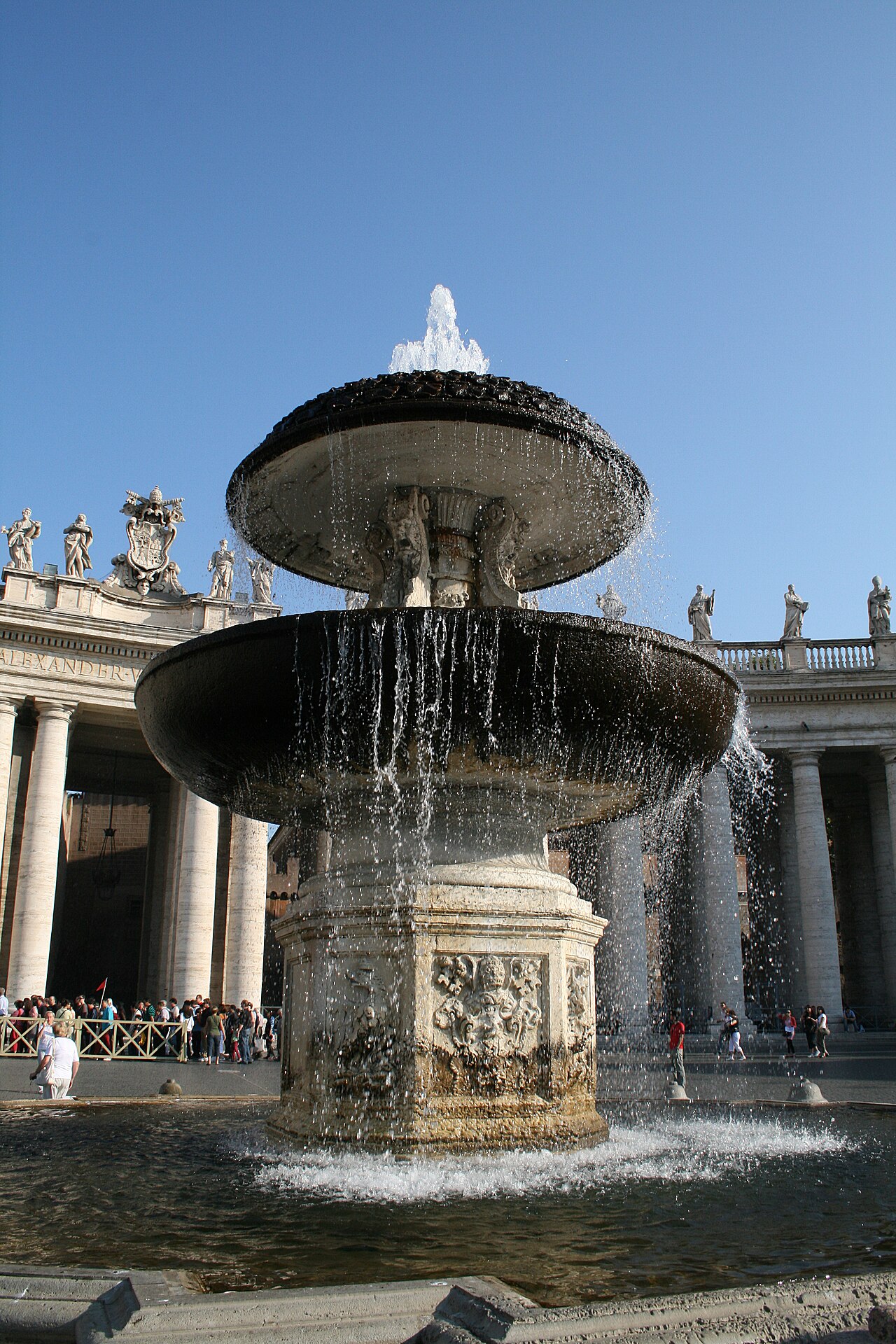
Frequently Asked Questions
Who is Carlo Maderno?
Carlo Maderno was an Italian architect born in 1556 in Capolago, in what is now the Ticino region of Switzerland. He is widely regarded as one of the founding figures of Baroque architecture in Italy.
What buildings is Carlo Maderno most famous for?
His most celebrated works are the façades of Santa Susanna, St. Peter's Basilica, and Sant'Andrea della Valle in Rome. These three projects are considered pivotal in shaping the visual language of the Italian Baroque.
Where and when did Carlo Maderno die?
Maderno died in Rome on 31 January 1629, having spent the latter part of his career working in the city.
Why is Carlo Maderno important in architectural history?
He is credited as a father of Baroque architecture because his façade designs helped transition Italian building away from Renaissance restraint toward the more dynamic, theatrical forms that define the Baroque era. His work on St. Peter's Basilica, in particular, set a precedent for how large church exteriors could be conceived.
Is Carlo Maderno the brother of sculptor Stefano Maderno?
He is frequently referred to as Stefano Maderno's brother, but this familial link is not universally confirmed by scholars. The relationship remains a point of some uncertainty among historians of the period.
More in Architects 1-24
Spotted an error? Know more?
This is a living reference — every entry is fact-audited, and reader corrections feed straight into our audit queue. Suggest an edit · See this site's audit record